
Welcome to Wellness Reimagined, a monthly link-up focused on health and wellness in 2025. This series aims to support participants in maintaining an active, healthy lifestyle, staying on track, and creating space for reflection, planning, and realignment with individual goals and intentions. Although I have managed to keep up my usual fitness routine (outlined here), my focus this month has been on better understanding ultra-processed foods (UPFs) and implementing concrete actions built upon this understanding.
I’ve done much reading, video viewing and, per usual, have tumbled down many rabbit holes related to this topic. To help keep things brief and prevent your eyes from glazing over, here are five (not so) fun facts that I discovered about UPFs (in a minefield of current information on this topic)
1. Wait, What!? My Unsweetened Soya Milk is Ultra-Processed?
Reducing meat and dairy consumption felt like a healthy choice for me personally and environmentally. But most plant-based milks, including my beloved soya, are now classified as UPFs due to heavy processing and added emulsifiers, salts (and oftentimes sugars). My soya milk label, boldly proclaiming “Organic Soy, Deliciously Nutritious,” also lists ingredients like gellan gum, “natural flavour” (kinda vague) and salts. The classification of plant-based milks as being truly ultra-processed has been highly debated.
This is an excellent illustration of how confusing the journey of understanding ultra-processed foods can be.
2. And My Peanut Butter Is No Better?
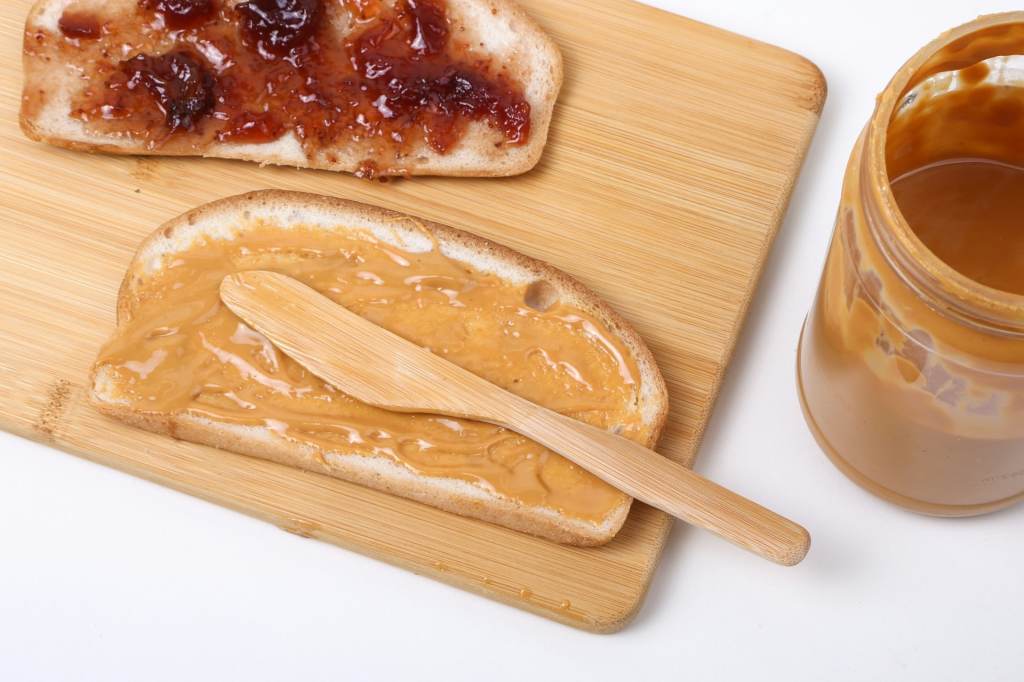
This one was less ambiguous—and came with an unpleasant surprise. My name-brand peanut butter listed roasted peanuts, sugar, corn syrup, palm oil, and salt as its ingredients. While manufacturers claim palm oil acts as an emulsifier here, critics argue it’s simply a cheap filler.
High in saturated fats and linked to devastating environmental harm, palm oil makes my morning breakfast more problematic. Add to that, my ‘baked in the store’ whole wheat bread is also ultra-processed (seriously, who knew?). Yes, I know I could bake my own bread—but I have already given away my breadmaker and stand firm on that decision.
3. Food Labels Can Be Misleading – Is That Even Legal?
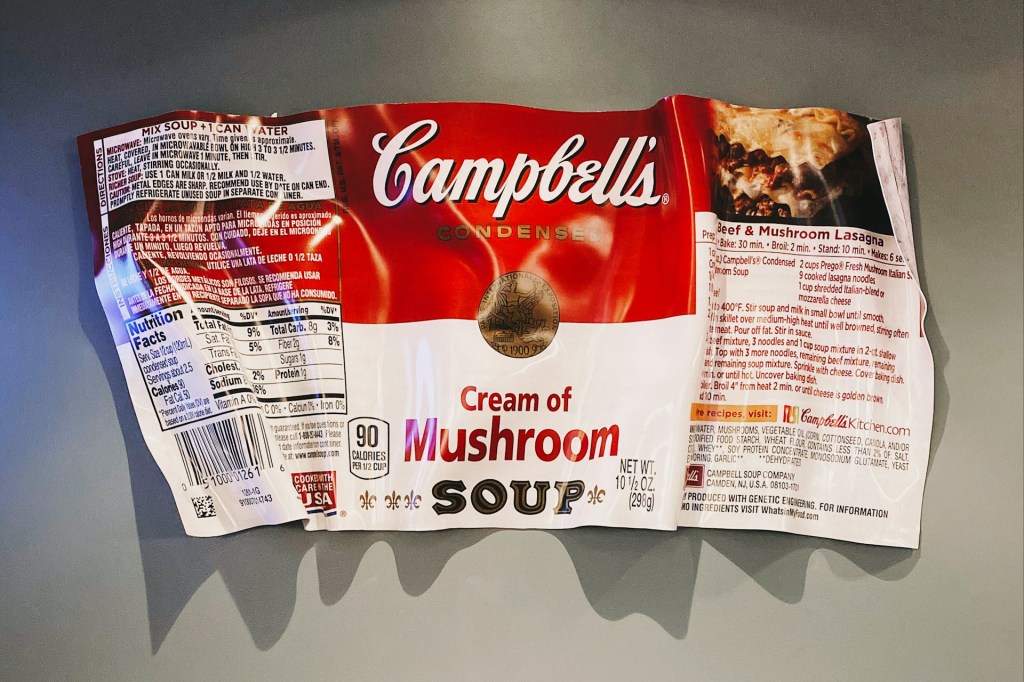
Health claims on food labels often boldly proclaim a UPF to be healthy, “low-fat,” “sugar-free,” and/or “fortified” when they have simply replaced one ingredient with a worse one (e.g., swapping fat for sugar and other questionable ingredients).
This causes the food to become nutritionally unbalanced, often resulting in a cocktail of chemicals. Adding to this, foods that are deemed “saints” and “villains” keep changing over time (think butter/margarine, dairy milk/nut milk, coffee, wine, meat patties/vegetarian patties…..etc., etc.). No wonder many of us start with healthy eating intentions, then end up in the corner with a bag of Doritos for dinner!
Additionally, many ingredients listed on ultra-processed food labels are impossible to pronounce. Terms like maltodextrin, carboxymethyl cellulose, and butylated hydroxytoluene make me gloss over them without knowing what they mean. This helps UPFs to include hidden salts, stabilizers, emulsifiers, and artificial colours (many derived from petroleum). These ingredients often result in food that is not really food and negatively impacts our microbiomes, cognitive function, emotional wellness and overall health.
4. What In the Heck Are Bliss Points?

UPFs are scientifically designed to maximize pleasure through an ideal mix of salt, sugar, and fat – called the “bliss point.” UPF’s low-fibre content and rapid digestibility hinder natural satiety cues, leading to overeating and, in some cases, addictive-like behaviours. This creates a vicious cycle that’s tough to break
5. Increasing Consumption of UPFs Has Been Linked to a Higher Risk of Developing Dementia
Various studies are now showing an increased risk of dementia for those who consume a high amount of UPFs. A UK study published in The American Journal of Clinical Nutrition in 2023 showed that a 10% increase in UPF intake was associated with a 25% higher risk of dementia. This was enough said for me!
Taking Action
Here are a few steps I’ve taken this past month to help address the above. While it’s not a lengthy or perfect list, it has been my sincere focus, and I believe it’s been a good start.
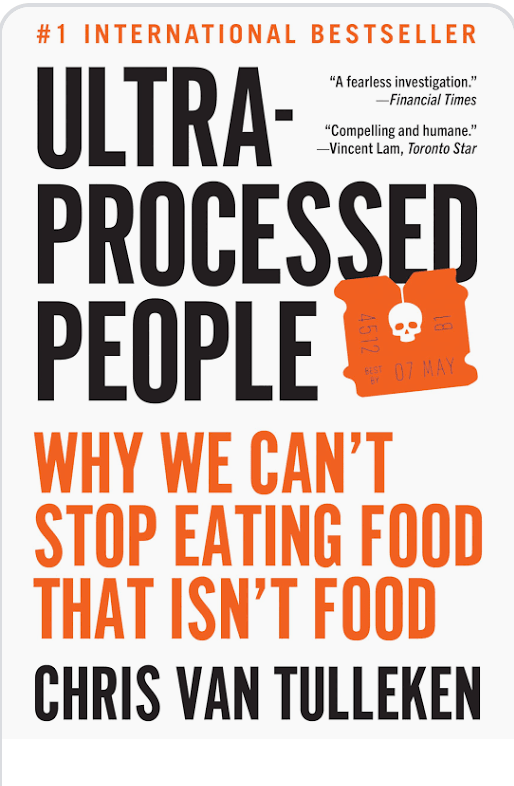
- Becoming Better Informed: I’ve been working hard to better understand the broad topic and potential dangers of ultra-processed foods. Along with Van Tulleken’s book (see my review here), I have read numerous articles and have viewed several videos. If you don’t have time to read his book but are interested in what Tulleken has to say, you can watch this 10-minute video summarizing his insights.
While some argue UPFs aren’t as harmful as critics suggest, consider who funds those opposing studies—often the same corporations that profit from these foods.
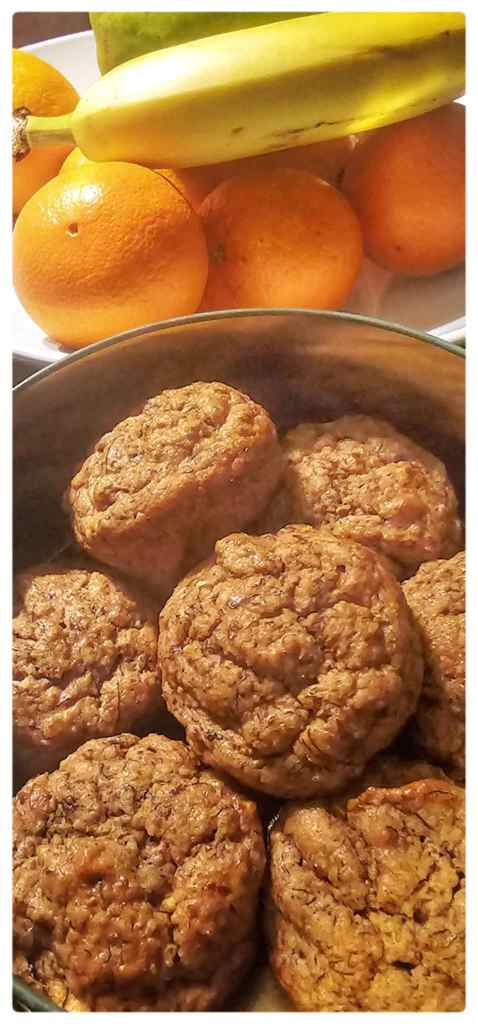
2. Homemade Nut Milk: I’ve started making almond, oat, and coconut milk with a $35 Starfrit Nutmilk Maker from Walmart. While more expensive nutmilk machines constantly parade themselves online, this one was quick and simple to use, and I found the nutmilks it produced were actually quite tasty. With the leftover nut pulp, I made delicious, healthy muffins. Win-win!
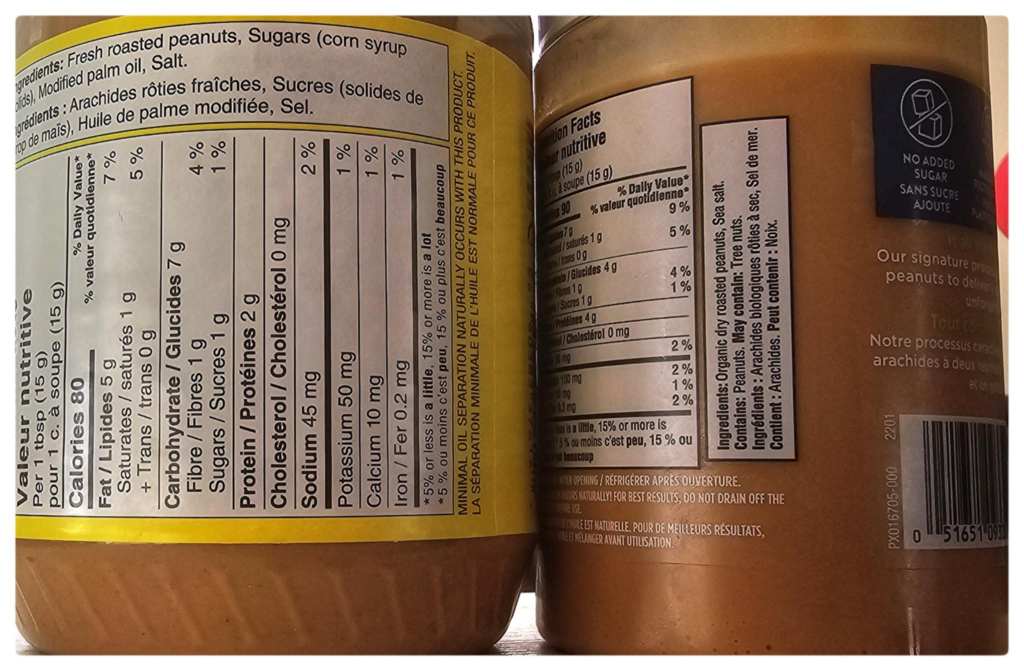
3. Selecting Foods With Fewer Ingredients: I switched to a two-ingredient brand of peanut butter (just peanuts and sea salt). Yes, I have to stir it, but I don’t miss the palm oil.
4. Meal Planning: Weekly meal planning has been a game-changer—easier, faster, healthier, and more affordable. I’ve also found it to be highly enjoyable. Seriously, why have I not been doing this more often?
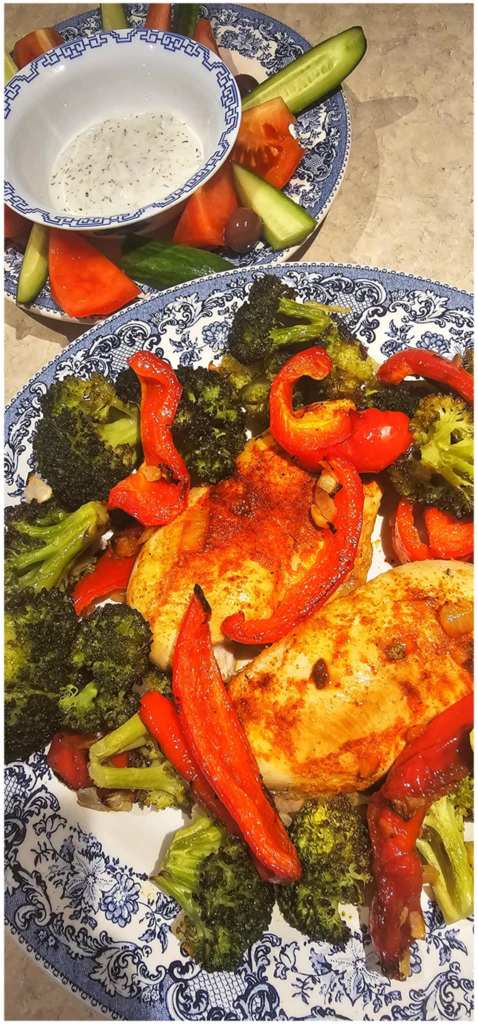
5. Whole-Food Focus: My husband and I have doubled down on whole foods. We have found sheet pan dinners to be a lifesaver. Combine protein, veggies, olive oil, a few spices and we’re done!

6. Daily Exercise Challenge Women Living Well After 50
Sue at Women Living Well After 50 hosts an exercise challenge where participants can check in with their daily wellness goals/accomplishments. For February, she has included a focus on nutrition, explicitly addressing UPFs. This is a wonderfully supportive group without judgment. If you are curious, I highly recommend checking it out.

7. Local Shopping: Whenever possible, I buy local products, changing what I had originally planned to make, when necessary, in order to buy Canadian. But this is a story for an entirely different post.
Over to You
How was your January? What has been your recent experience with ultra-processed foods? Do you have any other health/fitness/wellness stories or tips to share? Please tell us about them in the comments, via ‘Contact Me’ or by linking up your own wellness-related post here:


We would love to hear from you!

 Retirement Reflections
I’ve been looking at fresh produce origins for a few years already, to make sure I chose local/Canadian over imported but now I’m applying that review to everything else going into my cart! It’s hard to find non-US grown salad greens at this time of year but I did find some from Alberta at the store last week. Slowly but surely I have been moving away from ultra processed foods over the past decade…I’m loathe to give up my vanilla soy in my lattes though 😭. I hope my body will forgive me! Thanks for such an informative post, Donna 💕
LikeLiked by 2 people
Hi, Deb – I know that oat milk and almond milk are not your thing, but I have been very happy with the ones that I have made. As soon as I venture into making homemade soya milk, my first successful batch will be for you. We found non-US salad greens yesterday at the QB Farmers market. I’d be happy to pick some up for you any Saturday!
I look forward to seeing you very soon! ❤
LikeLiked by 2 people
Hi Donna, I’ve recently fallen down a similar rabbit hole regarding UPF. It’s so very maddening when you start reading the labels and there are more additives than real food!!! I’ve also switched to a peanut butter that is only peanuts and sea salt…and it’s really good!! I still occasionally fall prey to the pull of something sweet, that probably won’t ever go away 🥴
LikeLiked by 2 people
Hi, Sharon – I love when great minds think alike — and are on similar journies. My husand and I also often crave something sweet. I’ve been keeping our fruit bowl full, and our fridge stacked with grapes and berries. I’ve also been keeping extra plain greek yogurt in our fridge which I lightly sweeten with a drizzle of fresh honey whenever the sweet urge strikes and won’t go away. Yup, fruits still contain extra sugar – but at least the unprocessed kind! ❤
LikeLiked by 1 person
Hi Donna, you have certainly done the research and I believe we all need to take responsibility to learn more about what we are putting into our bodies. However, I won’t be giving up my soy milk as I only have a small amount each day. My peanut butter is all nuts so that is fine. I am taking the balanced approach where I will eat 80-95% whole or minimal processed foods but 5-10% may be UPF and I’m comfortable with that. I don’t have the time or inclination to make my own milk or bread so will either not have it or accept it. Thanks for all the info and for being a co-host for #WellnessReimagined link up.
LikeLiked by 1 person
Hi, Sue – I wholeheartedly agree with you that as long as we each increase our awareness of UPFs, and take responsibility for what we are putting into our bodies, we each then need to do what works best for us so that it is sustainable in the long term. I recently took a course with a well-regarded nutritionist. On the last day of class, she ended her presentation with a picture of very decadent looking chocolate cake. Her point was that we need to enjoy life and the foods that we are eating as well. That was an excellent reminder about the importance of balance.
LikeLiked by 3 people
Good on you, Donna, for sharing this research. I have difficulty calling oat/soy drinks “milk.” Growing up on a farm, milk came from the mammary glands of the cows we milked. And speaking of growing up on that farm, if we didn’t grow it, pick it or kill it, we didn’t eat. I often say we were the original organic farmers. It might have been a subsistence lifestyle but we sure ate well as I’m coming to appreciate more & more. I’m still growing & preserving a lot of vegetables. We’re lucky to have Redcliff, the greenhouse capital of Alberta. I eat seasonally as much as possible. Today, I made a lettuce salad using grated kohlrabi, grown in my friend’s garden. Yesterday, I made a quinoa/black bean soup using homemade tomato sauce. Like Sue, I eat mostly whole foods with minimal processed food. Everything in moderation, including moderation.
LikeLiked by 1 person
Hi, Mona – Growing up with that eating style, and still being able to follow a similar eating pattern today, is a real blessing. More and more research studies suggest that diets high in ultra-processed foods during formative years are directly linked to negative health outcomes in the longterm, especially cardiovascular diseases, cardiometabolic issues, periodontal diseases, damages to our brain health and increased mortality. That’s a pretty frightening list. The good news is that research is also suggesting that it is often not too late to change our diets and reap positive benefits.
LikeLike
Cheers to eating healthy and good health!
LikeLiked by 1 person
That’s definitely the goal. So far, it’s been a very engaging and positive journey!
LikeLiked by 1 person
They’re so sneaky aren’t they Donna? I figure anything that comes in a can or a packet is going to have a few dodgy things added into the mix. I can’t get over how long bread lasts these days compared to my childhood where it went stale and mouldy with a few days. I think it all comes back to balance – keeping the UPF for treats and filling up on more wholesome food.
LikeLiked by 1 person
Hi, Leanne – Sneaky is a great word for it! Many big food companies include deliberate deception on their labels and marketing. It’s hard to believe that they are allowed to do this. You are right about UPF breads (which accounts for 95% of the breads in most of our grocery stores) being surprisingly long lasting). This past September, a friend of mine found a commercial loaf of bread in her garage (a brand I’ve purchased several times) that she had misplaced there over a year before. Although it was a bit stale, it did look the same as it had before and did not have one spot of mold on it. Her garage is not airconditioned. She obviously did not eat it. But this is a great example of the incredible amount of preservatives in foods that we don’t usually think of as being ultra-processed.
LikeLike
Although we are nowhere near as diligent as you, we try to eat as close to the source as we can… most of the time. My peanut butter is nuts only and I just checked my oat creamer, and it looks pretty good too. BUT I know I need to educate myself a lot more, so I know what to look for. Like Leanne said, they are really sneaky.
I salute you for avoiding US products. We need to show as much resistance as possible.
LikeLiked by 1 person
Thanks, Janis – Eating close to the source whenever you can is a great plan. And nut only peanut butter is perfect. Thank you for all of your continued support and understanding. I believe that when good people unite, we can tilt our world towards peace, even when it is just one small step of resistance at a time. ❤
LikeLiked by 1 person
This is a long-time Vancouver BC producer for past 40-50 years: https://sunrise-soya.com/product/sunrise-unsweetened-soya-beverage-2l/
LikeLiked by 1 person
Thank you for dropping by and sharing this. I have searched our local grocery stores for a minimally processed soya beverage with no emulsifiers or additives, but didn’t find this option. I will look again and see if it is hiding in a different seciton of my grocery stores.
LikeLike
Great post, Donna. A lot of healthy eating starts with looking at the ingredients. Mark learned a lot about this topic and other effects some food has on our health when he was sick.
When he can avoid it, he doesn’t buy anything that has sugar in it. He’s always bought 100% maple syrup and peanut butter. Yup, that’s peanut butter with one ingredient: peanuts. And, yes, he has to stir it before every use. Maya loves licking the knife afterwards. 🙂
There is so much to be said about this topic, but, in general, the less ingredients, the better. Finding healthier products is harder in third world countries. So, Mark and I stick to a plant-based diet and staple, whole foods whenever possible. Many products claim to be healthy because they are sugar-free, while now ingredients like sucralose are added.
LikeLiked by 1 person
Thanks, Liesbet. You’re so right—checking ingredients is key to healthy eating. Mark’s approach makes much sense. I admire his commitment to avoiding added sugars. Sticking to whole, plant-based foods sounds like a great way to stay in control of what you’re eating – especially while traveling. And yikes! Those “sugar-free” labels can be so misleading when artificial sweeteners sneak in. Thanks for sharing your perspective—I greatly appreciate your insights.
LikeLiked by 1 person
I am thinking a lot more about eating healthy than I used to. We have a guy here in the running for pushing a healthy America. I’m kind of hoping he gets through so I can find out what it feels like to be healthy again!
LikeLiked by 1 person
Hi, Jacqui – Knowing what it feels like to be healthy again is an excellent goal. The great news is that baby steps can lead us there and it is never too late to start. ❤
LikeLiked by 1 person
Hi Donna, Thank you for sharing your UPFs research and actions. I watched the video that you included. Sheet pan dinner recipes are among my favourites. I’ve been buying Canadian products as much as possible and trying to eat as healthy as possible. I’m definitely buying Canadian products more now even if it means substitutes. Here’s my contribution: https://natalietheexplorer.home.blog/2025/02/02/maintaining-fitness-in-january/
LikeLiked by 1 person
Hi, Natalie – This past month, I’ve been intensely focusing on buying only Canadian goods and produce. When that hasn’t been possible (citrus fruit, etc.), I’ve chosen options from outside the U.S., usually from Mexico. If that hasn’t been possible, I’ve gone without.
Richard absolutely loves oranges, but for the past two weeks, we couldn’t find any that met our criteria, so we didn’t buy any. Tonight, I found a bag of oranges from Morocco. That’s a lot of food miles, but since they fit our criteria—and they’re Richard’s number one favorite fruit—I took a deep breath and bought them.
He’s already had one, raved about it, and was so satisfied that he didn’t search for any other evening snacks (which he typically does). I took that as a win.
LikeLiked by 1 person
Hi Donna, Yes, I think the bag of oranges from Morocco is a win. Like you, I’ve been focusing on buying only Canadian goods and produce. I’ve been scrutinizing the source of every grocery item before putting it in my shopping cart. My local grocery store flags “Made or Grown in Ontario/ Canada” products and that helps my shopping process. Some items like apples I can get Ontario-grown apples year-round. I’ve chosen options from outside the US (e.g. bananas from Guatemala or Costa Rica). I am willing to walk further to St Lawrence Market Farmers’ Market to buy local produce.
LikeLiked by 1 person
Hi, Natalie – I love when great minds think alike. ❤ I greatly appreciate you sharing your experiences in focusing on buying Canadian products. As I continue on this journey, it is very helpful to know what others are doing. Walking further to St. Lawrence Market for local produce is a win-win plan!
LikeLike
So much great information here Donna. I thought I knew it all about this topic, but your post shows I have still have much to learn. Bliss points??? I have never heard of them, but find it quite weird. I agree that it’s best to buy local and I would say to buy in season, for the best quality.
LikeLiked by 1 person
Hi, Jennifer – You are absolutely correct. There is now a mindfield of information on the topic of UPFs – significantly expanding what we once thought about them.
The ability of food industry to tap into the bliss point and mouthfeel is part of their drive to produce addictive products that keep us reaching for more.
Better understanding these concepts empowers us to make informed choices and can hopefully help push the demand for nutrient-dense alternatives from the food industry. Vida, Integrated Health, offers a good article on this topic here.
LikeLiked by 1 person
Living in New Zealand we eat seasonally – imported stuff is expensive and it takes all the joy out of eg only eating asparagus for a short while in the year (and I might even add in avocados there too! And yes they do grow here). We have two local bakeries who make their own bread – I love bread and am not giving it up and don’t have time to make my own at the moment.
LikeLiked by 1 person
Hi Donna, this was such a fabulous post on this topic of UPF and you’ve summed it up so well, many thanks for doing so because otherwise I would be in the corner eating doritos (and I hate doritos).
It’s amazing once you start reading labels of ingredients and how sneaky they are as Leanne said! Thanks so much for your informative post and I have to say I love the banner at the bottom of your post with all of the co-hosts, is there a way you could share it so I could use it too? xx
LikeLiked by 1 person
Hi, Debbie – Take two on my reply! My first reply (which I had not thought to save) received a stern warning form WP saying “This comment cannot be posted” and then the comment quickly disappeared. I have no idea what I said that triggered that message.
Thank you for your very uplifiting feedback. UPFs are a fascinating topic to me and I am learning a great deal (with much, much more to learn).
You, Sue, Jo and Jen are most welcome to use the co-host graphic. I thought that I had shared it previously. If not, my sincere apologies. It is on its way now.
LikeLiked by 1 person
““This comment cannot be posted” and then the comment quickly disappeared. I have no idea what I said that triggered that message.” I am also seeing these messages, Donna. IT’s taken me most of the evening just to comment on a few blogs. I wonder if they have a glitch in the system
LikeLiked by 1 person
Hi, Carole – I agree that this is likely a glitch in the sytem. This happened to me again last night. I received an error message that the comment that I wrote could not be posted. But I had saved that comment so reposted seconds later and it went through exactly as written.
LikeLike
Hi Donna,
I started my UPF journey at Christmas after my daughter discovered the Elmlea cream I’d bought to make Dauphinoise potatoes was not cream but a mixture of oils and chemicals. I’d used it for years and assumed it was real dairy cream and not manufactured.
“While some argue UPFs aren’t as harmful as critics suggest, consider who funds those opposing studies—often the same corporations that profit from these foods.”
Exactly.
When I first started my research journey I was bamboozled by conflicting advice.
LikeLike
Hi, Carole – It is great to have a friend who is at a similar place, and a similar timeline on the UPF journey. I have always worked hard to try to have a healthy diet, eating as much plant based as possible. This endeavour, combined with my husband’s calorie consciousness, caused me to often choose foods that were marked as “lighter,” “fat free,” “no sugar added” and included some store bought vegetable patties, etc. etc. Also, until I retired, I often prepared foods as conveniently as possible, and ate on the fly. As you know, food labels are often deceptive, intentionally so. I am now back to more basics. A bit more chicken and fish, a bit more real dairy, but still the majority of my diet consisting of whole plants. It is an interesting and often confusing journey. I have greatly appreciated your food posts and insightful comments. ❤
LikeLiked by 1 person
Yes, the “lighter,” “fat free,” “no sugar added” options all sounded good in theory – now we know better. We don’t buy any of these now. As far as the low cholesterol diet is concerned I do press my husband to eat more oily fish and less red meat but he is his own worst enemy.
LikeLiked by 1 person
I get it. As spouses we can only do so much. 😀
LikeLike
A great post, Donna. I also purchase bread and milk but I make most meals from scratch.
LikeLike
Hi, Robbie – When you can make most of your meals from scratch, that is an ideal form of eating. Dairy milk is usually only minimally processed, and depending on what kind of bread you buy, and where you buy it from, that could be minimally processed as well. It sounds like you have an excellent food plan going!
LikeLiked by 1 person
I’m sure the bread contains preservatives but I can’t manage everything
LikeLike
You certainly have the right approach, Donna. I am fortunate in that I just don’t like things like milk, peanut buttered sweetened drinks so I don’t even study the labels much.
LikeLike
The meals that you and Jackie eat always sound healthy and delicious. I think you both have a great eating plan!
LikeLiked by 1 person
Thank you so much, Donna. Once I did all the cooking. Now I happily eat what I’m given 🙂
LikeLike
‘peanut butter and’
LikeLiked by 1 person
A very interesting post. Thank you.
LikeLike
Hi, Esther – It is great to hear from you. Thank you for reading and commenting.
LikeLiked by 1 person
Hi Donna, I have tried to visit all the blogs but substack is blocked by firefox and deb’s blog I tried to leave a reply not “to compare myself to anyone else – how many steps, what activities others do – we’re all unique with different bodies and needs” I wrote a lengthy reply and for some reason an error message popped up and I could comment. Sorry Debs. I will try again another time.
LikeLike
Hi, Carole – Thank you for letting me know. For some reason, I couldn’t connect to some of the blogs via InLinkz this time either. In most of those cases, I just went directly to Substack. I will let Debbie Harris know that you tried to comment on her blog but it did not go through. She will totally understand and will be happy for the effort. ❤
LikeLiked by 1 person
Wonderful to read about the progress you have made. We, too, try to eat mostly “real” food. Not always successful.
LikeLiked by 1 person
Hi, Laurie – It is wonderful to see you back in the blogging world. You have been greatly missed.
And about not being successful – it is definitely the effort that counts!
LikeLike
Excellent post Donna! They’re hiding everywhere.
Gone are the days when one can thoughtlessly toss food into the grocery cart and think it is healthful and safe.
I try really hard to only purchase FOOD, not chemicals, and reading labels is essential. If my grandmother wouldn’t recognize it as food, or if I can’t pronounce it, I simply don’t buy it, and try to stay out of the middle of the store except for things such as pasta.
LikeLike
Hi, Dorothy – Thank you for this very insightful comment. It sounds like we are following a similar plan. Previously, I avoided the middle sections of the grocery store, primarily shopping the outside refrigerated and produce section. Then, our local store put the yogurt and dairy section in the middle section. Very sneaky!
LikeLiked by 1 person
Wow, that really is sneaky!
LikeLiked by 1 person
I know, right?!!
LikeLike
I love to shop farmers markets for produce during the growing season. Somehow it seems easier to eat healthy in the summer!
LikeLike
Hi, Kate – I agree that it is easier to eat healthier with diverse fresh produce in the summer months. For winter months, I deeply wish that I liked squash and sweet potatoes more than I do. ❤
LikeLiked by 1 person
I like both of them but my husband does not. Makes it even harder.
LikeLiked by 1 person
I get that. I tend not to make foods that Richard does not like. Too much waste and doubleup when I do. 😦
LikeLike
How was your January? Well I’m in the USA so my answer is lousy. You understand.
What has been your recent experience with ultra-processed foods? I find that in general I don’t have a taste for ultra-processed foods, they do not call to me, EXCEPT around certain holidays and events. That’s when I think of them, like this weekend for the Super Bowl when chips, chips, chips, and dips will reign supreme.
LikeLike
Hi, Ally – I totally understand your pain. And speaking of pain, a certain president is trying to ensure that it is felt worldwide.
I didn’t think that I ate many ultraprocessed foods until I realized how many emulsifiers, stabilizers and other nasty chemicals are hidden in our breads, yogurts, nut milks, cereals, muesli bars, etc. etc. It’s been a very steep learning curve for me!
LikeLiked by 1 person
You are right about it being complicated! When I first started reading about UPFs I was amazed that things like bread counted, but I understand it much more now. As a vegetarian, I’ve been used to reading labels for years so that bit is easy – though I’m not as rigorous as you about avoiding UPFs. As a “mixed marriage” compromises like vegetarian sausages keep us both happy but I’m sure they’re not good for us! For shopping my preferences go Scotland, rest of the UK, Europe. Obviously for things like bananas that doesn’t work but I make sure they are fair trade ones. I don’t think we get much American produce, but if we did I would definitely be boycotting it!
LikeLike
Hi, Anabel – I am not vegetarian but have had a strong vegetarian-leaning for the past several years. This has inadvertently snuck some UPFs into my diet without me realizing it. I am now on a mission to understand and eliminate as many UPFs from my diet as possible. That has brought more eggs, chicken and fish back into my diet. It can be a full time job trying to make sure our diets are as healthy as possible! Often one positive diet choice cancels out another. 😦
LikeLiked by 1 person
I did a sanity check on my pantry and we’re actually not too bad. Our peanut butter is just peanuts and a little salt, I eat plain Greek yoghurt, and mostly cook completely from scratch. Some of our condiments UPFs eg Asian soy-sauce, oyster sauce etc. Grant buys crisps and nibbly things but I don’t like the taste they leave on my mouth. There’s so much research though about what this does to our brains and not just longevity but the years we have in good health. Great article.
LikeLike
Hi, Jo – Thanks for your kind feedback and insightful reply. I love conversations on this topic. I continue to learn so much. You are absolutely right – those innocent looking sauces can be killers. I am never one to waste, but I recently got rid of several that were lurking in our fridge and were each filled with more chemicals than I had realized. Other than that, like you, the rest of our fridge and pantry were pretty good. Phew!
LikeLiked by 1 person
Hi Donna – I am going to write an article on Chris van Tulleken – and am not sure if you came across the smoking connection to taste today in processed foods. It horrified me … I think I probably eat pretty healthily … and for many decades had home-grown vegetables and fruit … so the background is secure. Now I just need to go carefully – this is a great post: thanks for taking the time to study and reflect and then post – cheers Hilary
LikeLike
Hi, Hilary – Great minds think alike! I just stopped by your website and read and commented on your Light Reflef post which I greatly enjoyed. I’m delighted to hear that you plan to write an article on Chris Van Tulleken. I greatly look forward to reading it!
LikeLike
We are not very good at reading labels and selecting the right foods. I have started checking ingredients to see what is listed, and looking for foods with fewer things listed. And less sugar. But otherwise, I just grab things and throw them in the grocery cart. I could eat salad all day but want to jazz it up with blue cheese, nuts and cranberries and of course, dressing!!
I have been tracking my WW points fairly well in the new year. And WW has a new section on the app that tells you how many grams of protein, carbs, fats you have eaten. Oy vey.
Was tickled to get on the scales – okay, not tickled to get on the scales, but tickled to see I had lost an ounce or two this week. And began dancing around in the bathroom. PC climbed on the scales and received good news, too, and immediately suggested we go to a pizza buffet for lunch. Heaven help us!!
LikeLike
Hi, Leslie – You write awesome comments. I love your deadpan sense of humour! Healthy eating is so tricky these days. What works for one person, often does not work for another. Eating salad all day sounds pretty health to me, especially with cranberries and nuts on top. If you make your own dressing (quick and easy) that definitely sounds like a big win with little or not UPFs involved.
LikeLike
Have been using Skinny Girl dressing but I wonder what all is in it!! Need to investigate making my own wannabe skinny girl dressing. Thank you for that suggestion. XO
LikeLiked by 1 person
Hi, Leslie – I have a food app, Yuka, that rates the health quality of foods typically on our grocery store shelves. Sadly, Yuka is not a fan of Skinny Girl for health and rates their Italian dressing as Bad and their Rasperry dressing as poor. According to Dr. Google here are the ingredients in Skinny Girl Italian Dressing: Water, Maltodextrin, Cider Vinegar, Sorbitol, Salt, Lemon Juice Concentrate, Modified Corn Starch, Dried Garlic, Dried Red Bell Pepper, Dried Onion, Spices, Xanthan Gum, Potassium Sorbate, Sodium Benzoate and Calcium Disodium EDTA, Sucralose.
You could easily make your own. The internet is filled with easy, healthy, copy cat recipes. ❤
LikeLike
Oh my gravy!! Well, thank you for looking it up for me. Sounds more like a recipe for medicine than food. Going now to Pinterest to find a low fat-no sugar dressing recipe. Thank you again.
LikeLiked by 1 person
Hi, Leslie – If you find a salad dressing recipe that you like, please share!
LikeLike
I’m visiting via the recent #WBOYC link up and I’m so glad I did. I appreciate the points you’ve made and wholeheartedly agree! My husband was diagnosed with an autoimmune condition two years ago and then last year that condition attacked his kidneys. As part of his recovery, we met with a nutritionist to find natural ways that he could fight this. We had such a paradigm shift when he started on the autoimmune protocol diet (AIP) and for six months I cooked meals that were completely gluten free, sugar free, dairy free and about 5 more “free” things. Not an easy thing! Now I always check the ingredients and if there are more than 3-5 listed, I avoid them. We also only use olive, avocado or coconut oil. Slowly we’ve reintroduced foods to his diet and there are a few things he can tolerate but he has definitely given up gluten, seed oils, sugar and most dairy. It’s made a huge difference in his overall health and, thankfully, his blood work shows continued improvement, too. Thanks for sharing this informative post!
LikeLike
Hi, Laura – Thank you for your thoughtful comment. I’m glad you found your way to my post through the #WBOYC link-up. It’s wonderful to hear that your husband’s blood work is now showing improvements. That’s a testament to the power of nutrition, and your devoted care and attention. It’s inspiring to know what a positive difference this all has made. I look forward to staying in touch.
LikeLike
Hi Donna – I’ve been paying more attention to ultra processed foods and their labels and, like you, I’ve found it very confusing. As for peanut butter, I recently switched to the kind with palm oil because I heard that was better. Now, not so sure! Great post 🙂
LikeLike
Hi, Barbara – You are absolutely right. Trying to select the healthiest food options can be very confusing. And the food industry often adds to this confusion. I am not a health professional. My understanding is that when palm oil is added to peanut butter it is done so to prevent separation, and also possibly as a filler. Refined palm oil is highly processed significantly reducing its nutritional value and it is also very high in saturated fat. When eaten in moderation, peanut butters with just peanuts (and potentially salt) contain healthy fats and can have numerous health benefits, including heart health, muscle preservation and weight maintenance.
LikeLiked by 3 people
Good to know, Donna. Other nuts upset my stomach, so I have peanut butter. I’m going to look at other options. Thank you!
LikeLiked by 1 person
Thanks for sharing about the bliss point….
wow – I knew they used chemicals but this was very interesting….
—
and for me – I had lead poisoning and other toxicity in my body that took more than a decade to clean up – and so while learning this and that and then seeing what worked for me, we hardly dine out anymore so we can eat as clean as possible. No “industrial seed oils” and lots of meat and fruit.
I do not think vegetables were meant to be eaten and feel they have been promoted as healthy in a false way…. so that is why I prefer grass-fed steak… also, I eat less and less nuts the more I realize my body doesn’t do well with too many nuts (unless traveling, because a nice trail mix can be great for airports). Oh and yes, all natural peanut butter can be found at our house too – and there are many options (we used to make our own peanut butter with a food processor, but we don’t eat enough of it and so just buy it from Costco or the glass jar ones at our store – and side note- so glad we can still have all natural peanut butter because so many have allergies to it).
Also, your post reminded me of a story in the news (I could not find it to link) but it was about a food critic retiring because they were tired of the decline in food quality and was tried of eating processed foods, terrible meat or fake meats, etc.
Anyhow, cheers for this post because some people are not aware that this food is NOT really food.
LikeLike
Thanks, Yvette! I admire your commitment to eating as clean as possible—it really does make a huge difference. I agree that so much of what’s marketed as “food” isn’t actually nourishing, and once you start paying attention, it’s hard to ignore. Your story about the food critic is fascinating—I will take a look and see if I can find it.
Thank you for dropping by, I greatly appreciate it.
LikeLiked by 1 person
Hello – well I must admit that I was forced to clean up my diet because I had heavy metal toxicity and reducing that (with EDTA and activated charcoal) was only part of the full healing. Because my “terrain” was healing, I actually was set back when I had industrial seed oils. So, even if I did not really care about the negative effects of Canola oil (which is really bad and scars the liver – and that oil, along with most industrial seed oils, like vegetable oil are more for machines and not humans but they allow this toxic oil into our food). So for me, it was not like I had a choice because these chemical food products made me break out, gave me brain fog, or just made me feel sick….
I still forget and recently was somewhere and they offered me coffee with the “foam” creamer. Not sure if you heard of it, but it is coffee creamer in a spray can like whipped cream – and it tasted so good but I felt so sick after having it – sigh…. and then I realized I just sipped the following: hydrogenated vegetable oil, nonfat milk, high fructose corn syrup, sodium caseinate, artificial flavors, preservatives and emulsifiers, and chemical propellant used to get that foam out of the can
sigh
LikeLike
Hi, Yvette – It is so easy to not realize what we are getting in our food/drink, especially when we are out. I am sorry to hear about all of the health relataed issues that you have gone through. Wishing you continued wellness and healing.
LikeLike
A great post! My husband and I try hard to eat fresh and avoid anything in a can or box, but nut milk is a staple around here. I was intrigued by your purchase of a nut-milk maker! Of course nuts have their issues (expense, water consumption, far from local) but I prefer them as a nutritious option. We also do sheet-pan dinners and find them so easy to prepare (and I’m getting better at them – very plain at the beginning. Lol). Finally, yes, buy Canadian if you can. 🙂
LikeLike
Hi, Diana – Thank you so much for dropping by. I also believe that avoiding packaged, boxed and even cannot foods in favour of fresh makes a huge difference. There are great recipes out there for sheet pan dinners. I still tend to use ones from the old Chatelaine magazines. They are all still free online, example here: https://chatelaine.com/recipes/recipe-collections/sheet-pan-dinner-recipes/
Avoiding UPFs, carefully reading all food labels and buying Canadian products (or Mexican when I really can’t get enough Canadian fruit and veggies) means I am now in the grocery store much longer. I am also sadly paying more, but our health is totally worth it.
LikeLiked by 1 person
Food is one of our biggest expenses, Donna, but we figure it’s worth it. And I still have my bread-maker. Lol.
LikeLiked by 1 person
A huge and grateful ‘hello’ from the Southern Highlands just south of Sydney. I have wandered the highways and byways of online postings for some 14 years and just ‘discovered’ you 20 minutes back! And I am a ‘real foodie’ in both ways – love exciting dishes from all around the world but have actually studied ‘nutrition’ on a tertiary level for decades. So – to find this blog – well a Valentine’s Day gift !!! I too am one who, these days, looks at everything I put into my mouth and the back of most labels if I am dealing with a jar or packet . . . peanut butter > just the nuts and salt for a long time 🙂 ! Looking forwards to your next post and all your comments on others in-between!
LikeLike
Sorry I’m late for the meal this month, Donna! I can’t believe how much food is ultra processed. I’m trying to up my calcium uptake, by adding more foods that are calcium rich. I’m sad to learn most nut milks are UP. For 30 calories a cup one gets 450 gr calcium. I also love peanut butter…we have some local stores where you can grind the peanuts. Almond and peanut butter. Eating whole foods is the way to go. Your post was full of good to know ingredients for better health!!
LikeLike
Hi, Terri- Thanks for stopping by. If you ever want to make your own nut milk, I find it as easy as making a smoothie. And don’t forget seeds. Most are nutritional powerhouses with loads of calcium, especially poppy, sesame and chia!
LikeLiked by 1 person
Hi Donna – I have now bought Chris’ book … and will still listen to a talk I heard here … about smoking from the 50s and taste … today’s flavoured crisps and. vapes … it’s obvious – but so many are seduced by those tastes and their eyes … great post – thank you – cheers Hilary
LikeLike
Hi, HIlary – I’m delighted that you picked up Chris’s book. I can’t wait to hear your thoughts on this! Have I mentioned before that I always love reading what you have to say? ❤
LikeLiked by 1 person